Europe is expensive. Sometimes absurdly so. But some of its best luxuries are strangely cheap — because what you are really paying for is not the product, but access to a system that already works.
You cannot actually walk into a shop in Amsterdam, hand over €10, and ask for one unit of functioning public infrastructure, please.
But after living in Western Europe for a while, many Indians notice something odd about money. Your salary may buy you a smaller house, fewer restaurant meals and considerably less household help than the same lifestyle budget would in India. And yet €0, €5 or €10 can sometimes unlock experiences that are surprisingly difficult to recreate simply by spending more money back home. That is because the expensive bit has already been bought collectively.
Here are seven examples.
1. €10: A whole day of not thinking about where you parked
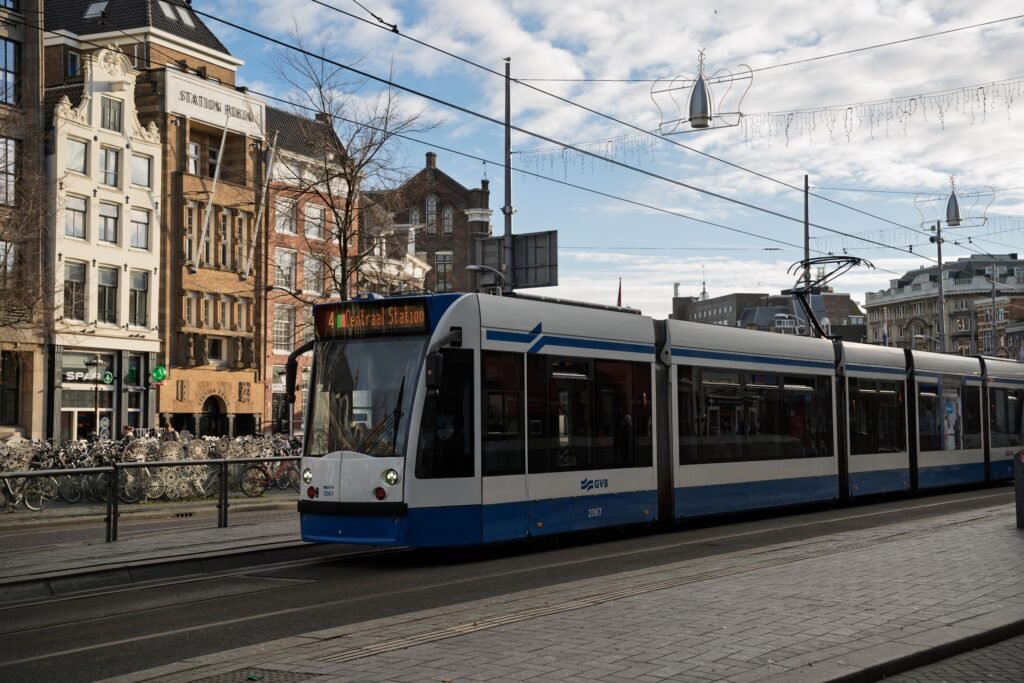
Amsterdam’s GVB currently sells a 24-hour day ticket for exactly €10, covering its trams, buses, and metros. Berlin’s equivalent is €11.20 for zones AB. GVB 2026 fares BVG 24-hour ticket
India can absolutely beat Europe on public transport prices. But the luxury is something slightly different: in cities where the tram, bus, train, bicycle and footpath connect properly, not owning a car stops feeling like a compromise.
You leave home. Walk for five minutes. Get on something. Get off. Walk again. No parking strategy. No driver negotiation. No mental spreadsheet calculating whether this trip is worth the traffic.
The actual luxury: mobility that requires surprisingly little planning.
2. €0: Water from the tap without conducting a risk assessment
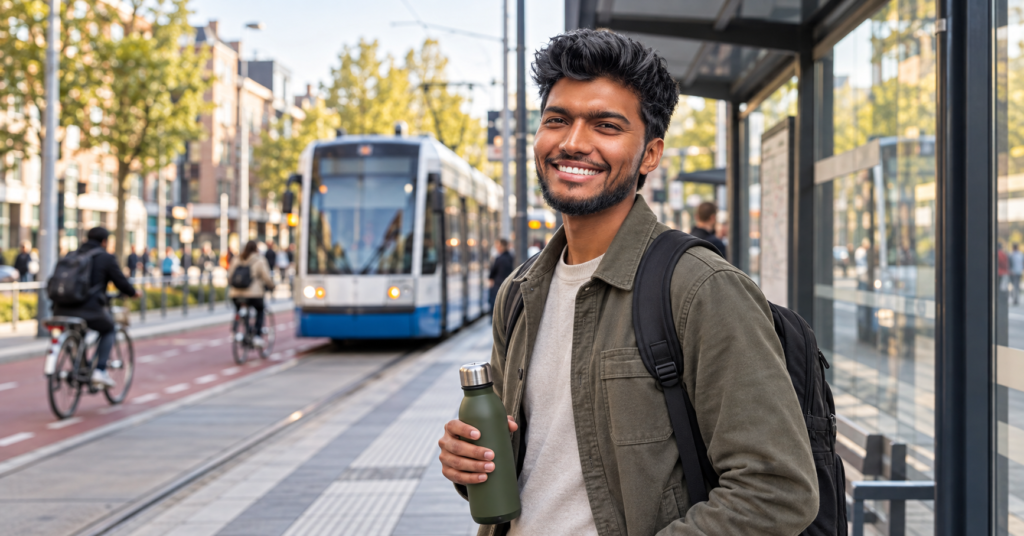
Feeling thirsty? All you have to do is turn on the kitchen tap and drink. For someone raised with some combination of Aquaguard, RO purifier, boiled water, Bisleri cans and parental instructions about exactly which water is trustworthy, the first few weeks can feel vaguely illegal.
In Amsterdam, Waternet says tap water is safe to drink throughout the city and that there are more than 500 public drinking-water taps where you can refill a bottle for free. Waternet: drinking tap water in Amsterdam. India, meanwhile, has made enormous progress in expanding household tap-water connections. But the fact that water quality, regularity, and local treatment still require major public programs tells you why Indians do not automatically develop the same relationship with a random tap.
The actual luxury: not having to think about how is the water.

3. €0: A footpath that has chosen a career in walking
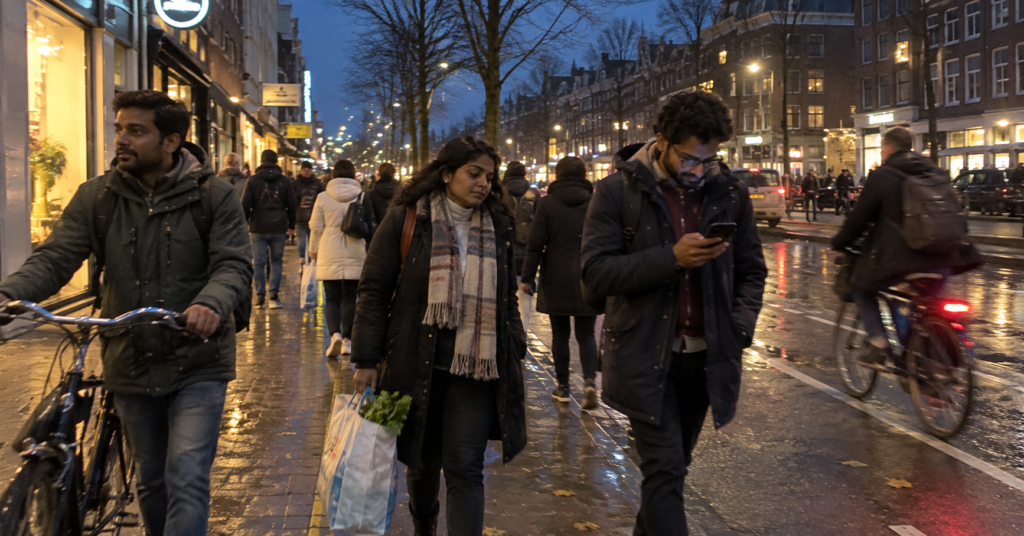
Perhaps the most underrated European immigrant experience is this. You walk on a footpath, and nothing happens. No motorcycle appears behind you. No parked SUV has claimed half of it. You do not suddenly descend into an excavation project.
Obviously, Europe contains bad pavements, construction sites, illegally parked cars, and urban planning crimes of its own. And Indian cities are actively redesigning streets: India’s Ministry of Housing and Urban Affairs has programs explicitly aimed at better pedestrian infrastructure and more people-centered streets.
But the contrast is still one Indians regularly notice abroad. In a recent online discussion, people joked about how long it took them to stop instinctively scanning the ground while walking or assuming that a vehicle might invade pedestrian space.
You can buy a luxury car in India. Buying a kilometer of pleasant pavement outside your house is considerably harder.
The actual luxury: being able to walk three kilometers without treating it as an obstacle course.
4. €4.80: A bicycle, plus a city that understands why you have one
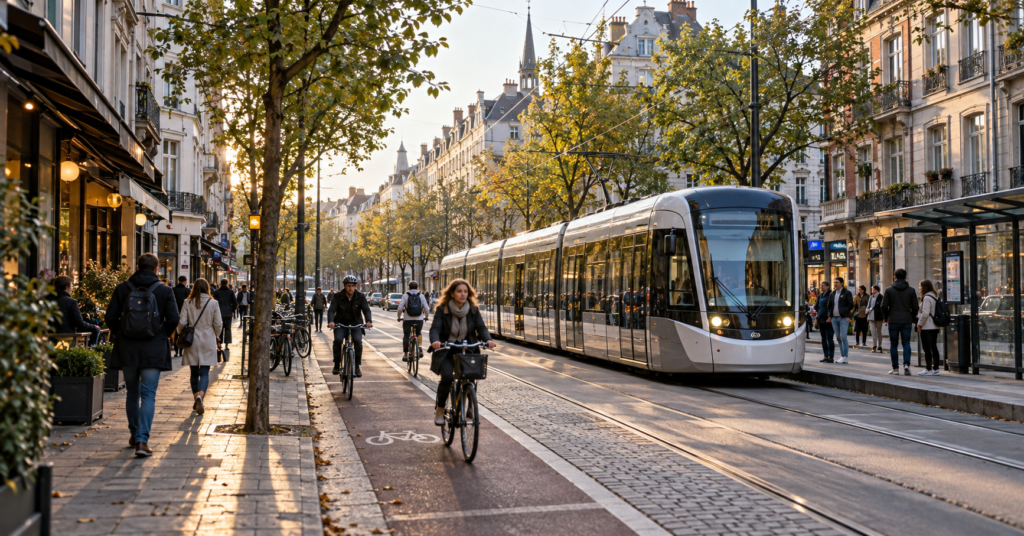
In the Netherlands, eligible travellers can rent an NS OV-fiets for €4.80 for 24 hours [NS OV-fiets prices]. The bicycle itself is spectacularly ordinary. It is grey-blue, heavy and has all the charisma of office stationery. But that is precisely the point.
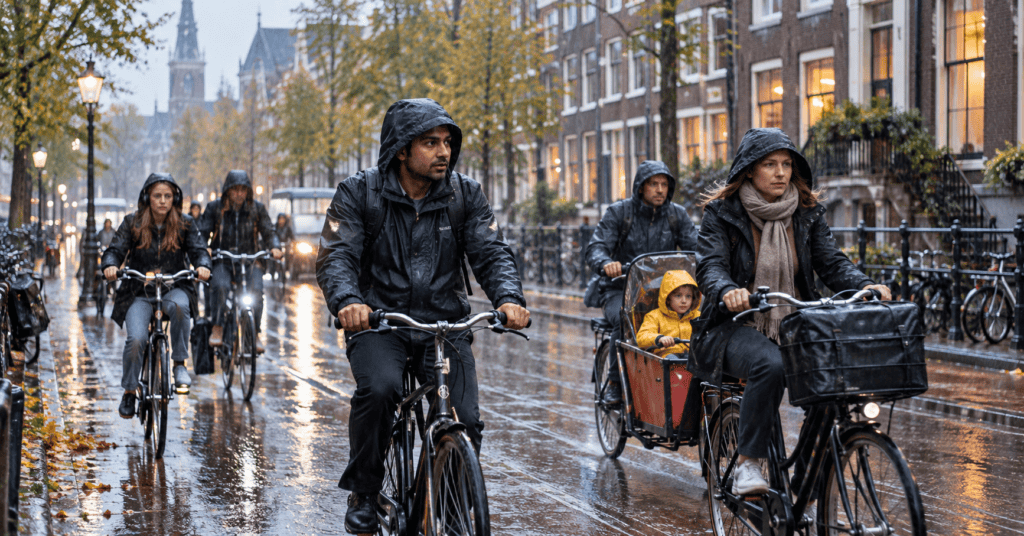
The product is not really the bike. The product is the cycle path, the bicycle parking, the traffic rules, the railway station designed to accept bicycles as part of a journey, and the reasonable expectation that cycling from A to B does not require the survival instincts of a Delhi auto-rickshaw driver. India has millions of bicycles. What is harder to buy individually is a city that treats yours as transport rather than an inconvenience.
5. €0: Going swimming in water without any worries
On a warm European afternoon, your friend might say “Let’s go to the lake.” For many Indians, an obvious follow-up question is “And… swim in it?”
Across the EU, Albania and Switzerland, more than 22,000 official bathing sites were monitored in 2025. 85% of EU bathing waters were classified as excellent, while 96% met at least the minimum required quality standard. Not every European river is pristine. The Netherlands itself had several poor-quality bathing sites in 2025, and authorities sometimes issue warnings. That caveat actually makes the system more interesting.
Somebody is testing it and publishing the results for you to check. The free afternoon at the lake is, therefore, sitting on top of wastewater treatment, environmental regulation, microbiological testing, and decades of infrastructure investment. You just did not have to pay it personally that afternoon.
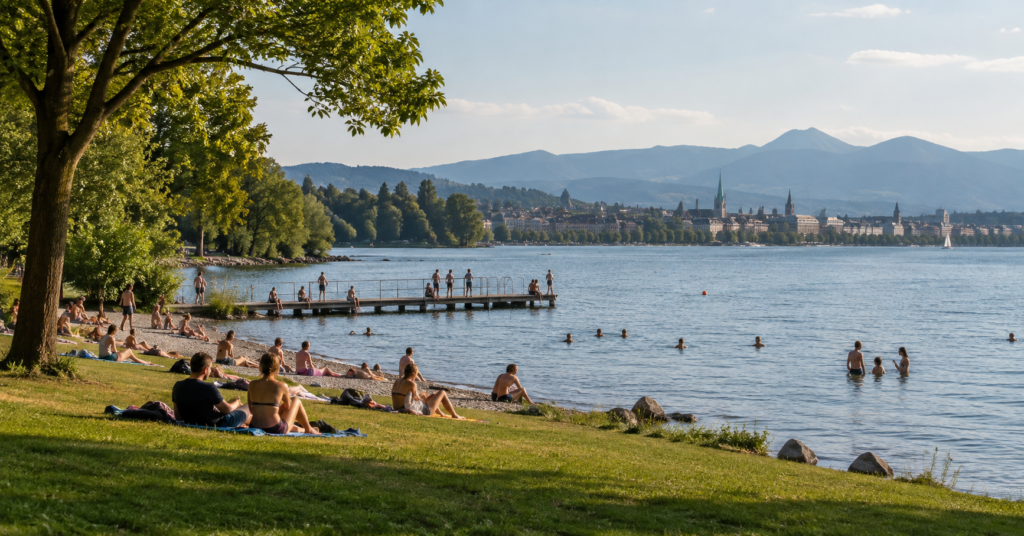
6. €0: Spending three hours somewhere without becoming a customer
This one is difficult to notice until you move. A park bench beside a canal. A public square. A riverbank. A forest trail. A library. A patch of grass beside a lake. You can arrive, sit, do nothing, and leave. Nobody asks whether you would like to order. No locals come over asking what you were doing in their neighborhood.
Of course, India has magnificent public spaces from neighborhood spaces to Lodhi Garden, Marine Drive, and countless beaches, parks, and promenades. The difference many migrants experience in parts of Western Europe is how thoroughly these spaces can be woven into day-to-day life. When you want to take a walk, you do not have to think about where you should go today; just go out and enjoy. A slice of nature is hardly ten minutes away, no matter where you live. For people coming from extremely dense Indian cities, that can feel absurdly luxurious.
7. €0: The freedom to be completely uninteresting
This is the least measurable item on the list and possibly the one people will argue about most. Several Indians living abroad describe enjoying a peculiar kind of anonymity: eating alone, walking alone, wearing whatever they are wearing, sitting in a park doing nothing, and discovering that strangers generally have more important things to worry about.
A recent viral post by an Indian traveler in France and Switzerland focused not only on scenery but also on seeing people of different ages simply traveling, cycling, hiking, and spending time outdoors as part of their normal lives. Europe is hardly a continent without nosy neighbors, bureaucracy, social pressure, or judgment. Anyone who has met a European homeowners’ association knows humanity remains intact.
But for some Indian migrants, being socially invisible for a few hours feels surprisingly freeing. You can sit alone in a café. Nobody needs your five-year plan. Nobody needs to know when you are getting married. Nobody needs to know why you are not having a second helping. Sometimes anonymity is a luxury too.
And apparently it costs nothing.
Before we accidentally become a European tourism board…
India wins some completely different categories by an embarrassing margin.
It can give you excellent food at 11:30 pm, repairs performed at speeds Europeans regard as theoretically impossible, absurdly convenient delivery, inexpensive personal services, spontaneous social plans, people who will actually help you move furniture, and a much lower probability that somebody charges you money merely for needing a toilet.
Some countries can make you pay to pee and then close the supermarket while you are still deciding what to cook. So this is not really a cost-of-living comparison. It is a distinction between private wealth and public wealth.
A high salary can buy a bigger apartment, a nicer car, bottled water, private clubs, and premium services. It cannot easily buy you the street outside your apartment. Or the lake. Or the air between the railway station and your house. Or everyone else’s behavior on the road. That may be why some of the things Indians end up valuing most in Europe have surprisingly small price tags.
What’s your €0 European luxury, and what is the Indian equivalent that Europe could never replace?