A set of copper plates can look like something made to impress a museum visitor. The Chola plates returned from Leiden in 2026 had a more practical purpose: keeping a durable record of agreements. That makes their journey a story about both heritage and the power of documents.
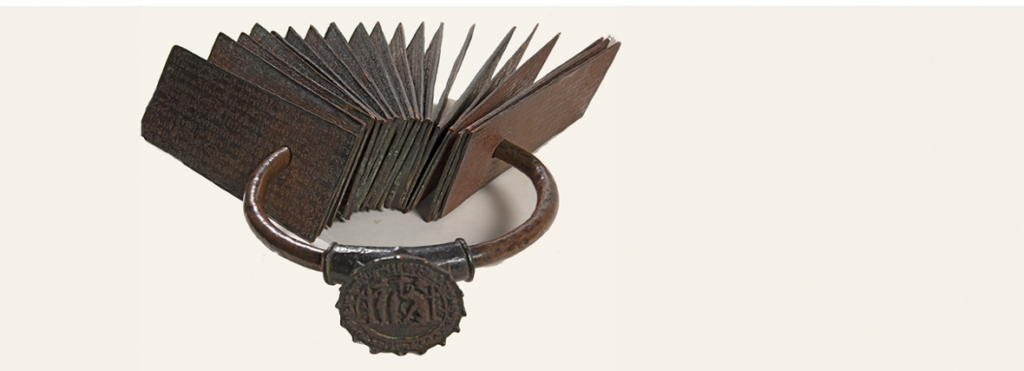
Before a document became a file on a laptop, it could be an object with considerable weight. The Chola plates held by Leiden University were copper records tied together by bronze rings, preserving agreements from 11th-century South India.
In 2026, they returned to Indian ownership. The Indian Embassy’s announcement of the May ceremony described royal charters related to the gift of Anaimangalam village to a Buddhist institution in Nagapattinam, Tamil Nadu. Their importance lies partly in what they recorded and in how they were made.
Documents that had work to do
The plates concern rights to revenue linked to Buddhist institutions. That is a different starting point from seeing them simply as beautiful metalwork or symbols of royal grandeur. They preserved claims with practical consequences for people and institutions.
According to Leiden University’s account, the collection consists of two objects: a set of 21 plates and a separate three-plate charter. The larger set contains Sanskrit and Tamil inscriptions; the smaller one contains Tamil. Their seals are associated with Rajendra Chola I and Kulottunga Chola I, respectively.
For a reader who has encountered the Cholas mainly through monumental buildings, popular history, or cinema, this offers another way into the period. Administration has left a physical trace. A record of revenue rights can illuminate a society just as a royal portrait can, though it asks different questions.
A long residence in a Dutch library
Leiden records possession from 1862 and notes the plates’ research value, including their evidence of connections between the Chola and Srivijaya empires.
That dual role helps explain why restitution raises more than one question. Where should an object be held? Who has authority over it? How should researchers and the public continue to encounter it? Making an object available for scholarship is valuable, but availability alone does not settle ownership.
For Indians living in the Netherlands, the connection is unusually close. A city known for its university also held records tied to institutions in Tamil Nadu. European collections can contain pieces of Indian history whose local presence is easy to miss until a return makes news.
The return, in five moments
| When | What happened |
|---|---|
| 11th century | The royal charters were issued in South India |
| From 1862 | Leiden University held the plates |
| Summer 2023 | India submitted a return request to Leiden |
| 16 May 2026 | The plates were presented at a ceremony in The Hague |
| By the university’s 7 September 2026 update | Leiden confirmed that the objects had been handed over to India |
The university’s later update confirms the completed transfer. An announcement, a ceremonial presentation, and a handover can be different stages of the same process.
Leiden sought provenance research and Colonial Collections Committee advice, receiving a recommendation to return the plates. Their collection history was part of the decision.
What a return changes
It is tempting to make restitution a tidy ending: an object goes home, and the story is finished. A return also opens questions about how the object will be preserved, studied, interpreted, and encountered by future visitors. Those are worth following after the diplomatic photographs.
The plates themselves invite that longer attention. What do the inscriptions say about the relationship between a ruler and a religious institution? Why were particular rights important enough to record on metal? What do the languages and seals help historians understand?
You do not have to read the inscriptions to recognize the underlying idea. A document can outlast the people who issued it and become evidence about their world. In this case, the paperwork lasted roughly a millennium—and became the subject of another set of documents about where it belonged.
Sources
- Leiden University. Leiden University to return Chola Plates to India, including the 7 September 2026 update.
- Embassy of India, The Hague. Restitution of Chola Copper Plates, 16 May 2026.
- Colonial Collections Committee. India: the Chola Plates case and recommendation.