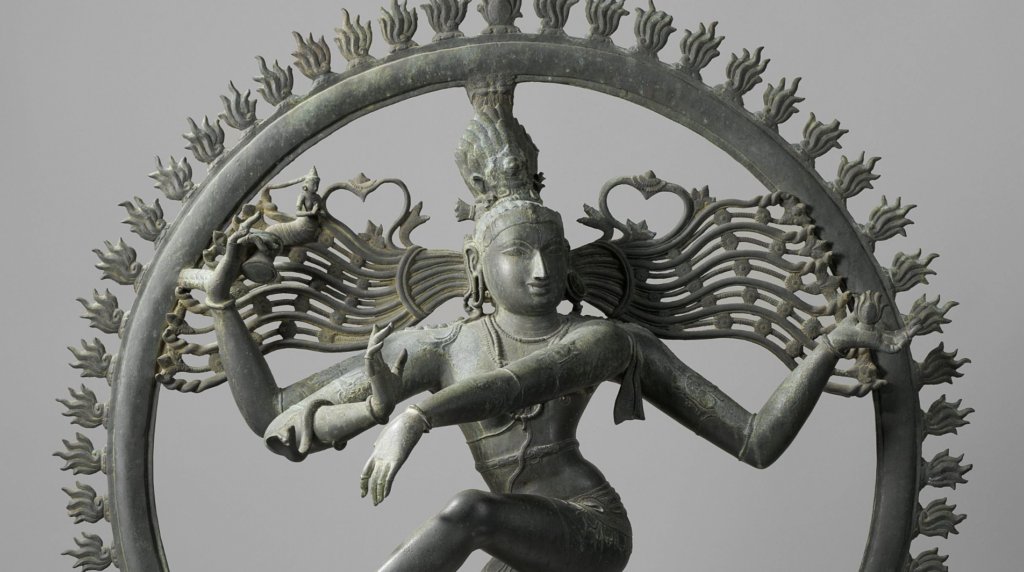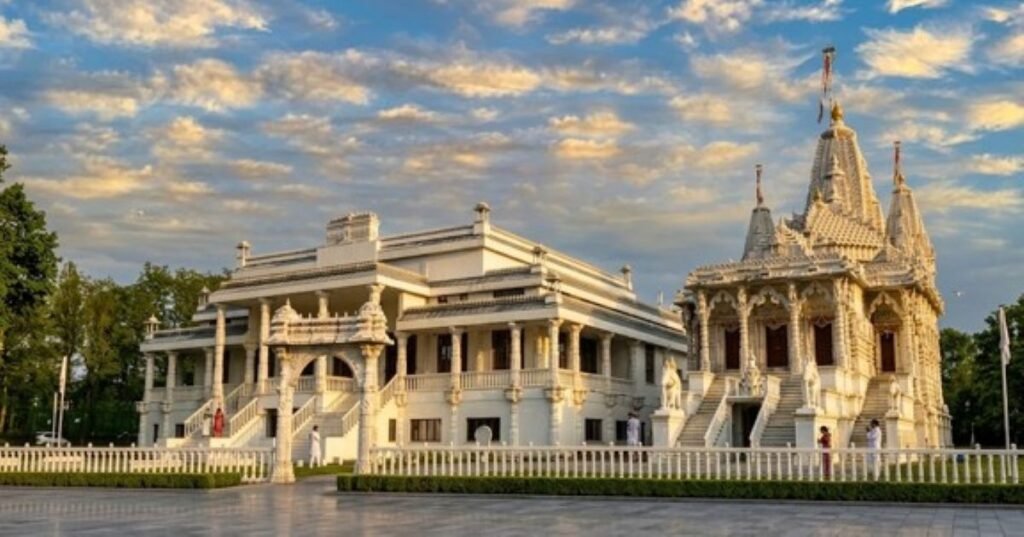
Antwerp’s Indian connection is visible in two very different forms: the diamond trade near its central station and a Jain temple farther south in Wilrijk. Follow the connection and a familiar Belgian day trip becomes a story about building a community.
An Indian connection in a European city does not always announce itself through a restaurant sign. Sometimes it is built into a trading network. Sometimes it appears in a religious institution that took years of planning, fundraising, and construction.
Antwerp offers both. The Antwerp World Diamond Center describes a trade in which India plays a major role in polishing, while Antwerp remains a center for dealing and specialized high-value work. The connection is commercial, but its consequences extend into where people live, gather, and establish institutions.
The Jain temple in Wilrijk makes that second part visible.
First stop: the trade behind the shop windows
Begin near Antwerpen-Centraal, rather than treating every diamond-related destination as the same neighborhood. The commercial district around the station and the historic jewelry streets nearer the old center tell different parts of the city’s story.
The businesses themselves are workplaces, not a public demonstration of how diamond trading happens. A walk can introduce the geography; it cannot give access to everything behind it. If you want historical context, DIVA, Antwerp’s museum for diamonds, jewelry, and silver, offers a broader entry into the subject.
For an Indian visitor, the interest is in recognising a link that may otherwise be easy to miss. India is not simply a distant origin story for objects displayed in Europe. It remains part of the industry’s present-day network.
Second stop: a temple built across borders
At Laarstraat 20 in Wilrijk, the Jain Cultural Center Antwerp’s temple tells a different story about that network. In its account of the project, JCCA connects the decision to build a temple to Indian merchants established in Antwerp’s diamond industry.
The organisation describes research visits to Indian temples, marble selection in Ahmedabad and Makrana, and work involving Indian craftspeople and Belgian construction companies. Construction began in April 2001, following years of planning.
Those details are worth dwelling on. A community institution is a commitment to a place. It takes people who are willing to organise something that will outlast one celebration, one visit, or one generation’s immediate needs.
The temple is also a reminder that “the Indian community” contains distinct religious, linguistic, and regional histories. A Jain institution has its own practices and purposes. It is more interesting to understand those than to treat the building as a generic Indian landmark.
Plan it as two places, not one walk
| Part of the outing | What it offers | Planning note |
|---|---|---|
| Area around Antwerpen-Centraal | The geography of the diamond trade | Observe public streets; do not assume businesses welcome casual visitors |
| Jain temple, Wilrijk | Architecture and the community’s religious institution | Arrange your visit with JCCA and allow a separate transport leg |
| Optional DIVA stop | Historical context for diamonds, jewellery, and silver | Check current museum opening and ticket information |
JCCA publishes visitor and route information. For transport on the day, check the De Lijn journey planner: routes and departures can change, and the temple’s morning and evening hours do not mean it is continuously open all afternoon.
Before you enter the temple
The published visitor rules require that shoes be removed and knees be covered; short dresses and sleeveless clothing are not permitted. Interior photography is prohibited, and visitors must not touch the idols or bring food inside. The rules also include a restriction on entry during menstruation. Read the full guidance before traveling and contact JCCA if any aspect of access needs clarification.
A religious building can be welcoming while having rules that differ from a museum’s. Planning around those rules makes the visit more comfortable for both visitors and the people using the space.
Look beyond the landmark
The best reason to include Wilrijk in an Antwerp trip is not to collect an unexpected photograph. It is to see what happens when a commercial connection becomes a community with its own places.
For Indians making a life elsewhere in Europe, that is a recognizable question. Work may bring people to a city. What they build together can become a reason to stay.
Sources
- Antwerp World Diamond Centre. The Antwerp diamond industry.
- Jain Cultural Center Antwerp. Temple history and visitor information.
- DIVA. Official museum information.
- De Lijn. Official journey planner. Access information checked 13 October 2026.